



Children and Weighted Blankets: A Parent's Honest Guide
Children and Weighted Blankets: A Parent's Honest Guide
You know the evening. The child who cannot settle. The one who needs another glass of water, another story, another conversation about something that happened three weeks ago. The one whose mind simply will not stop, no matter how tired their body is.
For many parents, bedtime is the hardest part of the day. Not because children are being difficult, but because some children genuinely find it hard to shift from a busy day into stillness. A weighted blanket is not a solution to every bedtime challenge. But for some children it can make winding down a little easier, and it is worth understanding properly before you buy.
Is a weighted blanket safe for children?
The short answer is yes, with one important condition. A child using a weighted blanket needs to be able to remove it independently. That means weighted blankets are not suitable for babies or very young children, and not recommended for any child who cannot lift and move the blanket themselves. As a general guide, that puts them at around age six and over.
For children who meet that condition, the same principle applies as for adults: a blanket of roughly 10 percent of body weight is the usual starting point. A child weighing 30 kilograms would typically do well starting with a 3 to 4 kilogram blanket.
Groundd's lightest option is the 4.5 kilogram Small blanket, which is the right starting point for most children. Starting lighter is always the sensible approach. The body needs time to get used to the feeling of gentle, even weight, and going lighter first means the experience is more likely to feel comforting than overwhelming.
When a weighted blanket tends to help
Not every child will take to a weighted blanket, and that is worth saying plainly. But for children who find it hard to settle at bedtime, or who simply love the feeling of being tucked in tight, it is often worth trying.
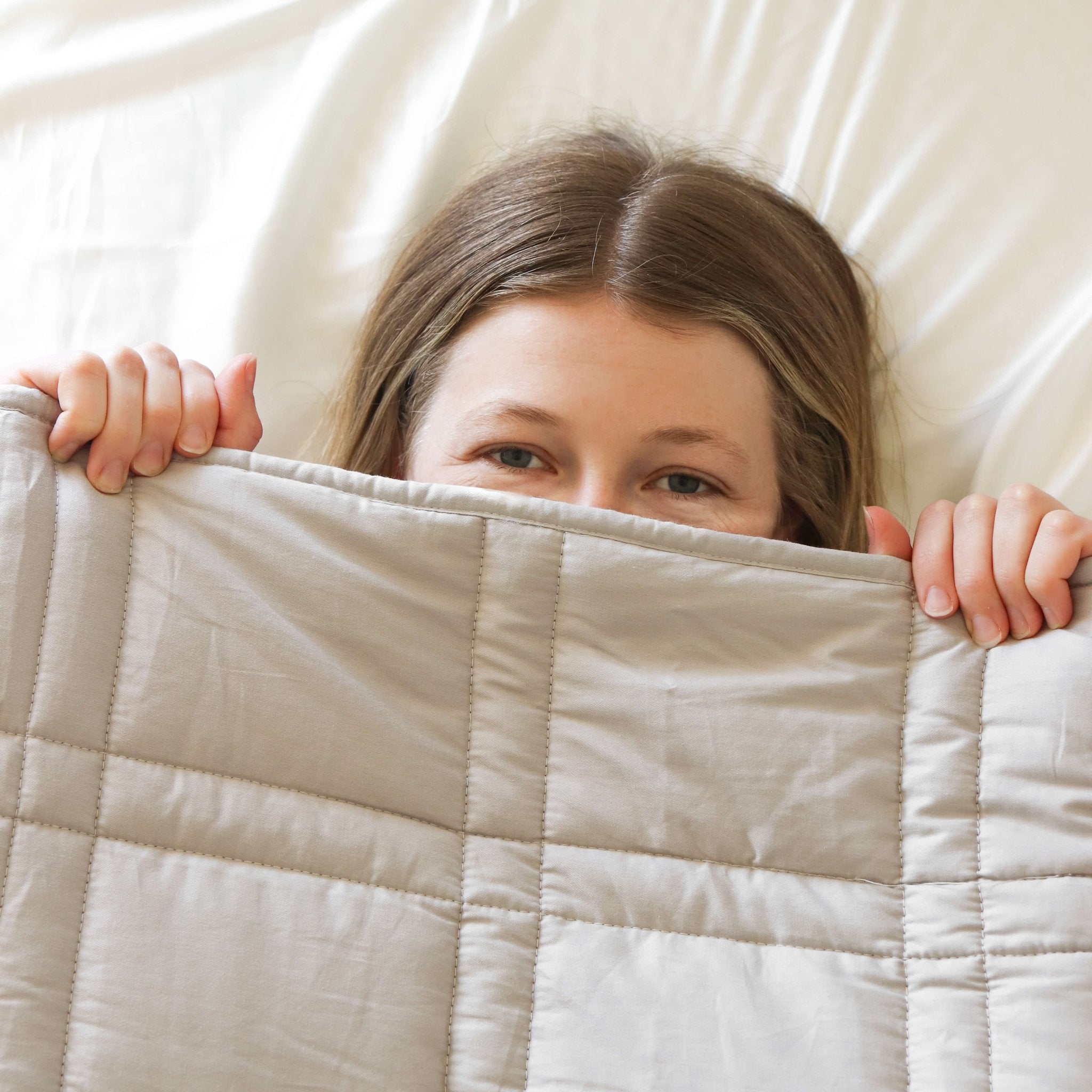
Children who sleep lightly and wake through the night sometimes enjoy the cosy, grounded feeling of even weight. Children who like to be squeezed, who wrap themselves tightly in their own bedding, or who pile blankets on are frequently the ones who take to it most. For them, a weighted blanket can feel like a reassuring hug to settle down under.
If your child has a health condition, or you are not sure whether a weighted blanket is right for them, have a chat with your GP or an occupational therapist first. They can advise on the right weight and how to introduce it.
Choosing the right size
The Small blanket (approximately 100 by 150 centimetres) is designed for a single small person and is the right size for most children. The Individual blanket is larger and better suited to teenagers and young adults.
Weight is about the body, not the bed. Start with the lightest option and give it two to three weeks before making a judgment. The first few nights with a weighted blanket can feel different, and some children take a little time to adjust. A child who seems unsure at first often comes back to it on their own once the novelty has settled.
What parents tell us
The feedback that stays with us is rarely dramatic. It is the parent whose child started asking for the blanket by name at bedtime, simply because it felt cosy and comforting. Not a transformation. A quiet, consistent shift in how the evening ends.
If you are not sure whether a weighted blanket is right for your child, the quiz takes sixty seconds and asks the four questions that matter.



Leave a comment
This site is protected by hCaptcha and the hCaptcha Privacy Policy and Terms of Service apply.